Speaking Skills

The National Speakers Association’s 2011 Annual Convention starts this weekend and it promises to be “rad, relevant, fresh, practical, fun and thought-provoking.” I would add overwhelming to the list… unless you go in with a plan.

Do you have plan? If not, let me give you one. (You can adapt this same plan to help with all of your information consumption — i.e. even if you’re not headed to the convention.)

1. Review everything you’re promised to learn how to do at Influence ’11:

  • Increase bookings
  • Grasp new clients
  • Write killer copy
  • Mesmerize audiences
  • Build your brand
  • Clarify your message
  • Connect with your tribe
  • Explode your creativity
  • Challenge your thinking
  • Create cash flow
  • Manage your biz
  • Define your market

2. Identify one, two or no more than three items on that list that are critical to your business right now.

Sure, it’s all good, but what will have the most immediate impact on your business?

Have that clear in your mind before you touch down in Anaheim.

3. When you arrive on-site, your objective is to seek out and consume wisdom and advice pertinent to the short list of items you really need help with.

Feel free to take notes on other topics (obviously), but stay focused on your objectives. If you give the full program equal attention, you’ll just come home with pages and pages of notes… and you won’t know where to begin. (I speak from experience!)

4. Make time on your flight home — or on your first day back at the office — to review your notes and create your action plan.

  • What will I do this week to improve in my target areas?
  • What will I do in the first 30 days?
  • In the first 90 days?
  • In the first six months?

5. Follow the plan!

Once you’re on track with your new initiatives, you can revisit your notes and make a plan to improve in other areas… or just choose new points of emphasis for next year’s convention!

Remember, ideas and information alone are worth nothing. It’s what you do with them that has value. Specifically, it’s what you do with what you learn in Anaheim that will make your speaking business better next year than it is this year.

Are you ready? Travel safe and have some fun!

Your value as a speaker is not in what you know… It’s in what you can help others do.

[ad code=4 align=center]

Last week we wrapped up the Succeed Speaking Summer Marketing Camp, and I opened the final session by speaking about Dr. BJ Fogg’s Behavior Model. (Dr. Fogg is founder of the Persuasive Technology Lab at Stanford University.)

Fogg’s model states that three elements must converge at the same moment for a behavior — or action — to occur: Motivation, Ability, and Trigger.

In other words, someone must be motivated to do something, s/he must have the ability to do something, and there must be a trigger to prompt the action. And if an action doesn’t occur, you know at least one element is missing.

This was very relevant to our marketing camp, because we knew our participants had the motivation to market themselves better (because something about their current marketing wasn’t working), and we gave them a trigger to stimulate action by inviting them to our camp.

But could we give them the ability to market themselves better?

That was our prime objective, and that’s how we’ll ultimately be judged in the weeks, months and years ahead.

It’s the same for you… when you take the stage as a speaker, when you write your books and when you create supplemental products.

But how do you do it?

Dr. Fogg says there are two ways to increase ability:

  1. Train people and give them more skills, and/or
  2. Make the target behavior easier to do — in other words, simplify the desired behavior.

“Training” is the easiest place for us to go as experts — we can share ideas, strategies and tactics all day long.

But as Dr. Fogg says, “Training people is hard work, and most people resist learning new things. That’s just how we are as humans: lazy.”

If you really want to increase the ability of those you speak to, focus on showing them how to easily implement what you teach — or better yet, what they already know! — in their daily lives.

At the end of the day, that’s what drives up your value as a speaker:

It’s not how much you know about selling. It’s how much better salespeople you help your attendees become.

It’s not how much you know about motivation. It’s how much more motivated you help your attendees become.

It’s not how much you know about leadership. It’s how much better leaders you help your attendees become.

It’s not how much I know about the speaking business. It’s how much better and more successful I can help you become.

Right?

There will always be someone who knows more than us.

But if we can simplify the target behaviors and actions to the point that we help our followers do what they need to do and experience better results

That’s what it’s all about.

Simplicity.

[ad code=4 align=center]

From the Succeed Speaking newsletter:

As a speaker, you’ve undoubtedly seen lots of speakers speak. Some of them make you say “Wow!” Some of them don’t.

When you think about the “wow!” speakers, what is the one quality that comes to mind? In one word, what is it that makes you remember them? That is what engaged you.

If we were in a room together where everyone could call out their one word, we would probably hear words like:

  • charisma
  • content
  • voice
  • command
  • story

How about AUTHENTICITY?

For me, when I think about all the speakers I’ve seen through the years, it’s the ones who come across as being authentic on stage that I’m attracted to. They’re the ones I’ll never forget.

What is authenticity? Merrian-Webster defines it as being “true to one’s own personality, spirit, or character.”

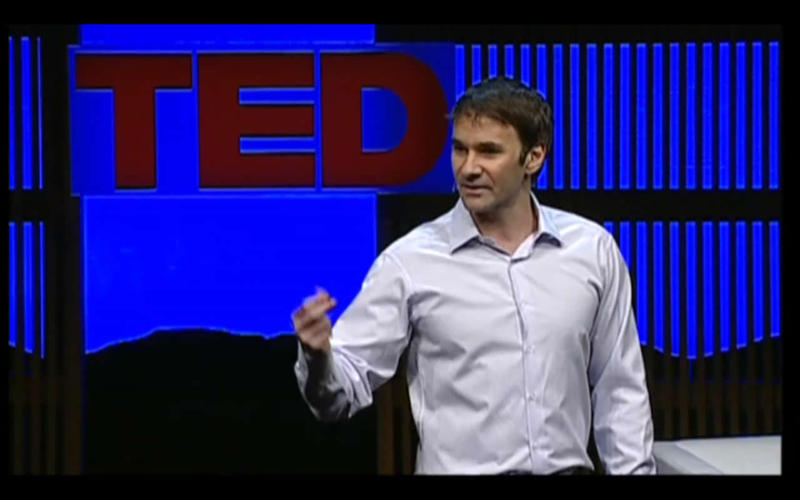
TED gets at it this way in the second of their 10 TED Commandments:

“Show us the real you. Share your passions, your dreams … and also your fears. Be vulnerable. Speak of failure as well as success.”

I once saw Keith Ferrazzi demonstrate this masterfully here in Nashville…

He had invited me to come see him speak at a corporate leadership event with 700-1,000 people. I sat down at the back of the room so I could take in the full scene — that’s where you can really see how the audience is engaging.

Keith Ferrazzi

So here comes Keith, after being introduced as one of Inc. magazine’s “most connected people in the world” and the youngest Chief Marketing Officer in the Fortune 500 and #1 New York Times best-selling author…

He takes the stage and starts speaking with authority — what you would expect from such an established, credentialed person. He’s telling us how important relationships are in business and how things need to improve…

All good material, but I have to say, I was a bit disappointed. This was my first time to see Keith speak in person, but I was a fan of his work and had known him for a couple of years at that point, and I was expecting something… better.

Well, then all of a sudden, a few minutes into his presentation, he lets the audience in on what he’s doing: he was just demonstrating — powerfully — what happens when we take relationships out of business. When we take authenticity out of business. (And out of speaking.)

Until this point, he was just a corporate suit in the spotlight with a microphone.

I remember he said, “When I was introduced with all of those credentials, you probably thought, ‘This guy sounds like a real jackass. Must be really full of himself.’”

Now, he gets real. He tells us about his personal struggles. About growing up in a blue collar mining town in a working class family. He talks about fears he had growing up and even now.

Whoa! No longer are we just listening to a guy who was the youngest CMO in the Fortune 500, best-selling author, etc… But we’re listening to a real guy. A guy who has fears just like me. Weaknesses just like me. He’s vulnerable. Now I’m listening! Now I’m engaged!

(Oh yeah, and now I’m rooting for him as he speaks because I care about him.)

You could feel the energy in the entire room change.

That is the power of authenticity.

So let’s turn to you…

Are you being true to your spirit when you’re on stage?

Are you sharing your dreams and passions… along with your fears and failures?

Are you being authentic?

If you are, well done, and keep it up… and please leave a comment below to encourage your fellow speakers who may be struggling with it.

Because if you’re not being true to yourself on stage, this isn’t a conviction.

It’s not easy to step out and be real. It’s easier to “play a role.” (And besides, as a speaker, aren’t you supposed to be all happy and victorious?!)

No, because if you’re all happy and victorious — all the time — then you’re not real… and I can’t connect with someone who’s not real. You can’t connect with someone who’s not real. (And it’s a sure path to burnout.)

As Garr Reynolds, author of Presentation Zen and The Naked Presenter, wrote on his blog a couple of weeks ago, “We don’t seek your perfection, only your authenticity.”

Isn’t that refreshing to hear?